February 19, 2026 Meeting Summary
Universal Health Plan Governance Board - February 2026 Summary
Big Picture
In February, the Board focused on four major areas:
1. Plan development timeline and transition planning
2. Eligibility and enrollment design
3. Expenditure projections and payment structure
4. Behavioral health plan design
The Board also established a Transition Committee and approved several plan design elements. Discussions highlighted tension between meeting the September report deadline and allowing adequate time for stakeholder engagement and preparation to approach the legislature with a 2027 - 2029 board funding request.
Plan Development Timeline & Impact on Referral to Ballot During 2027 Legislative Session
The Board reviewed the timeline leading to delivering a plan in September and discussed post-delivery
strategy. The Board is currently funded through June 2027 and briefly discussed their interest in seeking
additional funding for 2027–2029.
Key Timeline Milestones
March–April: Revenue and expenditure reconciliation, plan for 2027 - 2029
May: Incorporate feedback from targeted engagement groups
June: Final plan development, transition strategy development
July: Review first draft of report; continue transition planning
August: Approve final draft; begin building legislative support for 2027 - 2029 funding
September: Deliver final report
A contractor will present the draft plan to 15–20 interest groups in March for targeted feedback.
Board members discussed whether additional time is needed, but expressed concern that delaying the report could limit pre-session legislative conversations regarding their funding in the next biennium.
Of important note: delaying the report past September would be of high risk to a 2028 ballot initiative, as HCAO Action needs October through December to: a) identify legislative sponsors, b) craft referral legislation, and c) whip votes.
Expenditure Review & Cost Projections
The Board reviewed updated cost projections assuming enrollment growth, benefit expansion, and
utilization increases compared to current state.
Estimated costs range from $66.6 billion to $76.2 billion in 2032.
Administrative savings were not included in this discussion.
Of note: Long-Term Services and Supports have been removed from the plan due to concerns regarding migration of individuals from other states.
The Board briefly discussed how standardized fee schedules might reduce health care cost growth.
Eligibility & Enrollment Decisions
The Board clarified eligibility for the plan and approved several enrollment policies.
Eligibility Includes:
All Oregon residents, regardless of job, income, immigration status, or tribal membership
Out-of-state students attending college in Oregon
Dependents up to age 26
Seasonal farmworkers while in Oregon
Incarcerated individuals in Oregon
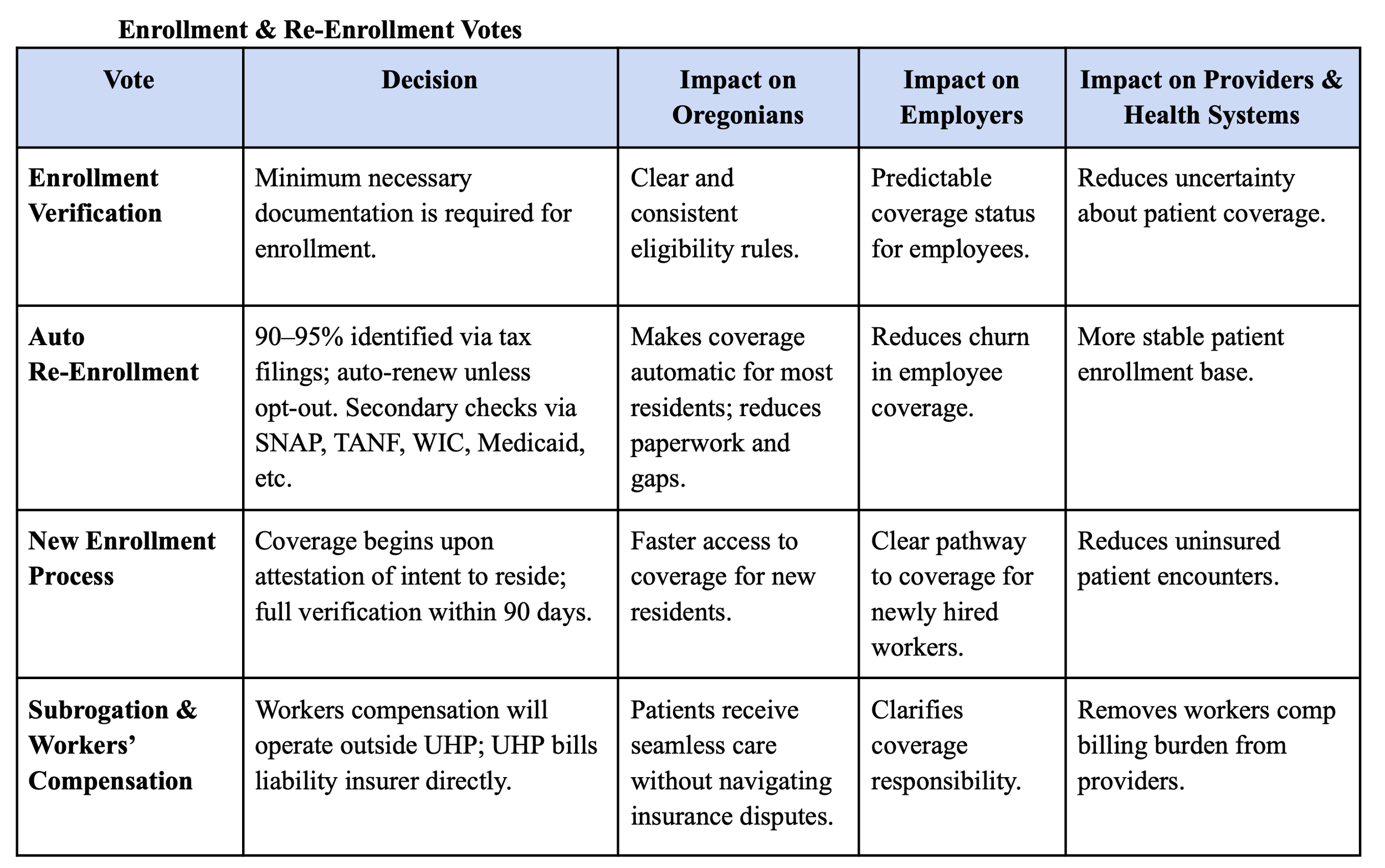
Enrollment and Re-enrollment considerations
Plan Design: Behavioral Health
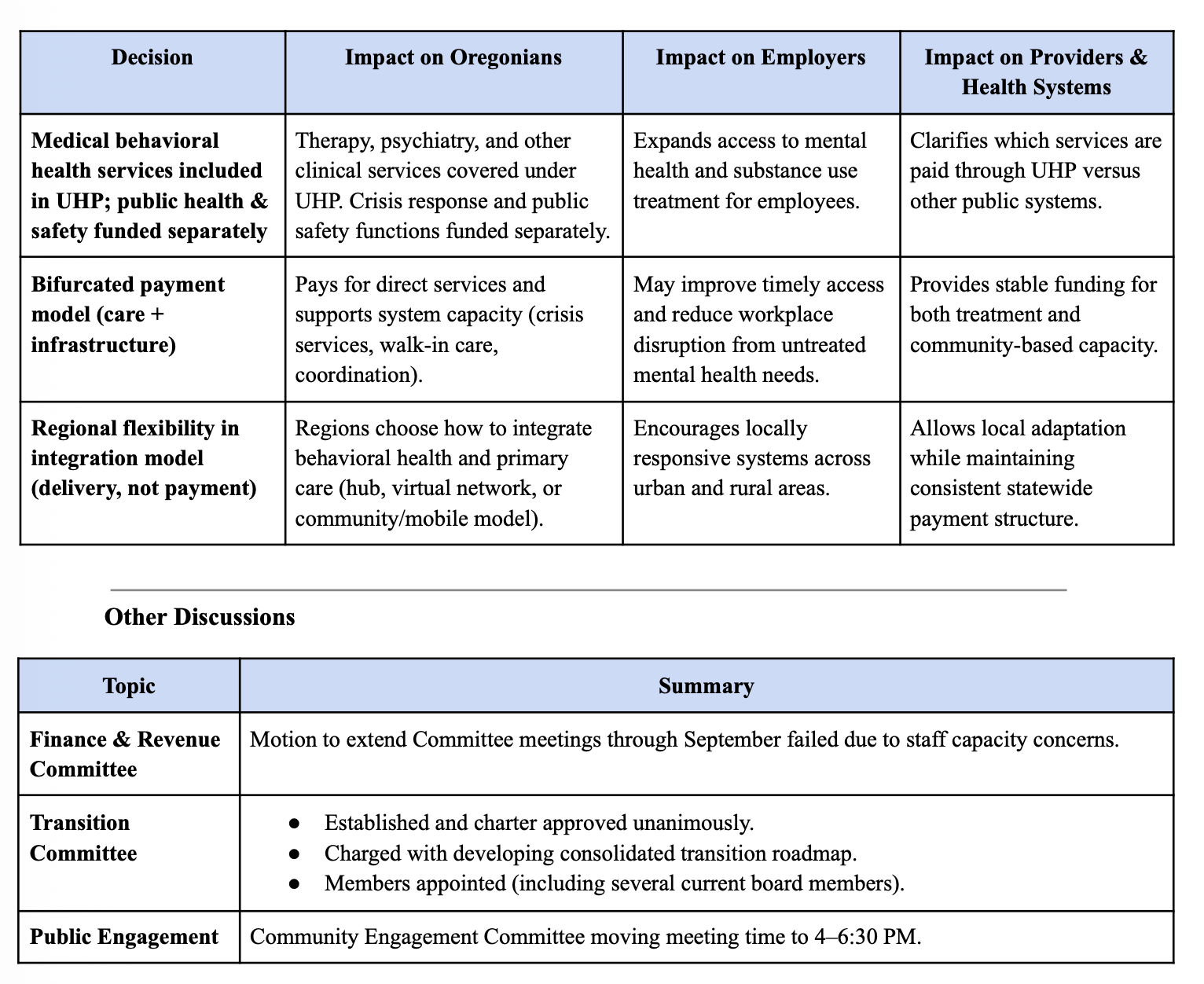
The Board approved three behavioral health model decisions. Of note: state hospital costs would not be
included in the universal health plan.
Behavioral Health Plan Design Votes
Board also received a presentation on Taiwan’s health care system.
Public Comment
Public comment included a number of HCAO-affiliated comments:
Requests for more engagement opportunities
Concerns about complexity of household size rate adjustments
Calls for stronger progressive taxation
Skepticism about value-based payments
—
Questions? Contact: emmaoppenheim@hcao.org