March 19, 2026 Meeting Summary
Big Picture
In March, the Board focused on four primary areas:
1. Policy Option Package for continued board funding
2. Administrative cost modeling and organizational structure (Milliman)
3. Reviewed revenue and reserve motions
4. Voted to approve cost containment strategies
Discussions reflected continued tension between meeting the September report deadline and resolving outstanding financing, operational, and federal coordination issues in sufficient detail to support legislative action and potential ballot referral.
Policy Option Package (POP) for Continued Board Funding
The Board reviewed a proposed Policy Option Package (POP) to extend and expand Board operations through June 30, 2027 and seek continued funding in the 2027–2029 biennium. The current budget is $1.9 million per biennium; the POP would include additional investments.
Additional funding requests include: a) Statewide engagement campaign, b) IT professional services contract, c) Statewide economic forecasting, d) Additional senior policy advisor, e) Potential additional OHA staff time.
OHA System Readiness
OHA provided a high-level overview of its system readiness assessment; a draft report will be presented April 9, discussed at the April 16th Board meeting, and finalized April 30.
Dr. John McConnell Presentation
Dr. John McConnell, OHSU Health Economist, presented an overview of U.S. health care financing and offered high-level feedback on Board decisions to date.
Milliman Administrative Cost Modeling
Milliman presented 2026 administrative cost estimates, trended forward to 2032, based largely on current insurance administrative models. Major findings included the following ongoing operational estimates:

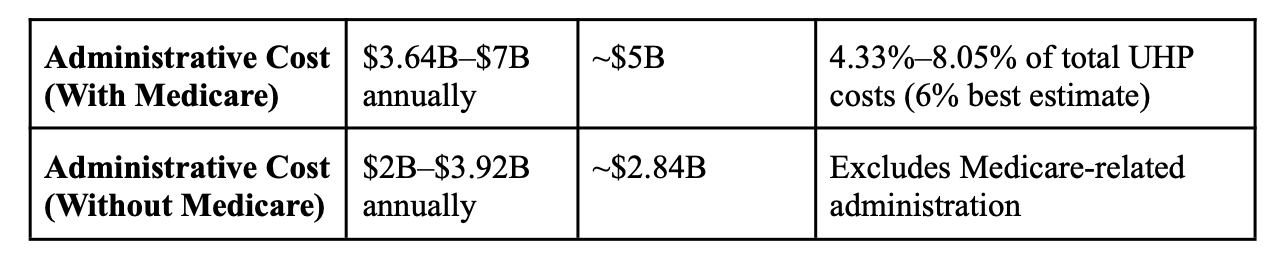
Board discussion highlighted:
Current Oregon health insurance sector employment (8,000–12,000 FTE) may suggest staffing estimates are too high
Estimates reflect today’s insurance model and may not account for efficiencies.
“Unified Financing Mechanism” Plan Framing
The Board Chair discussed framing the plan as a “unified financing mechanism” that wraps around
existing federal programs (Medicaid, Medicare) rather than a traditional federal single-payer model.
Committee Updates
Financing & Revenue Motions
The Finance & Revenue (F&R) Committee expressed disappointment at not completing its full work prior
to dissolution. Several F&R motions were presented to the Board:
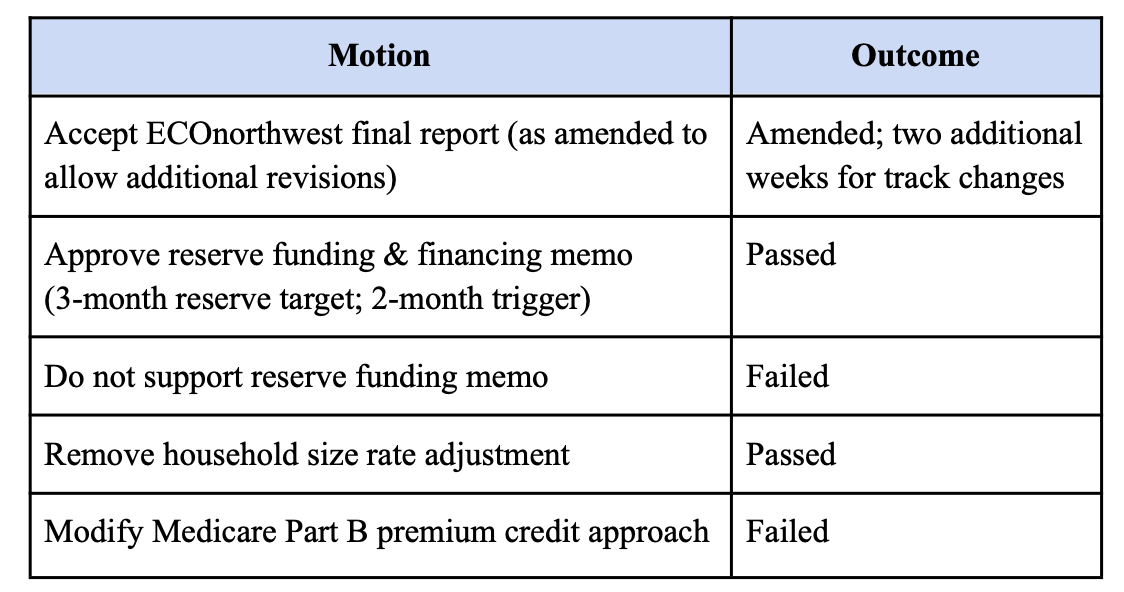
Enrollment and Re-enrollment considerations
Key issues discussed:
Political viability of revenue proposals
Structure of Medicare Part B premium credits and federal funding implications
Consideration of tiered employer payroll contributions
Need for additional modeling of cost savings
Plan Design and Expenditure: The Board voted to accept previously identified cost containment strategies from the Task Force. Remaining finance questions are expected to return to the full Board.
Operations: The Board reached general consensus that UHP should wrap around federally administered programs without interfering with their operations, while exploring care coordination and IT integration.
Community Engagement: Board outreach continues through formal feedback sessions and targeted focus groups. HCAO will be hosting town halls.
Public Comment
Public comment themes included:
Value-based payment concerns
Calls for stronger progressive taxation
Political viability of health care income taxes
Requests for clearer administrative cost modeling milestones
Looking Ahead: April deliverables include OHA readiness plan and ECOnorthwest financial revisions.
Bonus: Initial Transition Committee (Separate Meeting – High-Level Summary Only)
The Transition Committee met separately from the full Board.
Charter:
Develop and recommend to the Board a consolidated transition roadmap synthesizing unresolved issues,
dependencies, and sequencing considerations.
Primary responsibilities:
Refine unresolved proposals
Develop recommendations on outstanding plan details
Identify issues requiring clarification
Develop sequencing recommendations
Phased work plan:
Phase 1 (March–April): Issue intake and triage
Phase 2 (April–June): Refinement, recommendations, escalation
Phase 3 (June–July): Consolidation and close-out
—
Questions? Contact: emmaoppenheim@hcao.org